Today
20
in History
26
January
February
March
April
May
June
July
August
September
October
November
December
01
Thu
02
Fri
03
Sat
04
Sun
05
Mon
06
Tue
07
Wed
08
Thu
09
Fri
10
Sat
11
Sun
12
Mon
13
Tue
14
Wed
15
Thu
16
Fri
17
Sat
18
Sun
19
Mon
20
Tue
21
Wed
22
Thu
23
Fri
24
Sat
25
Sun
26
Mon
27
Tue
28
Wed
29
Thu
30
Fri
31
Sat
...
10-24-0079
The 17 Year-Old Witness to the Eruption of Vesuvius
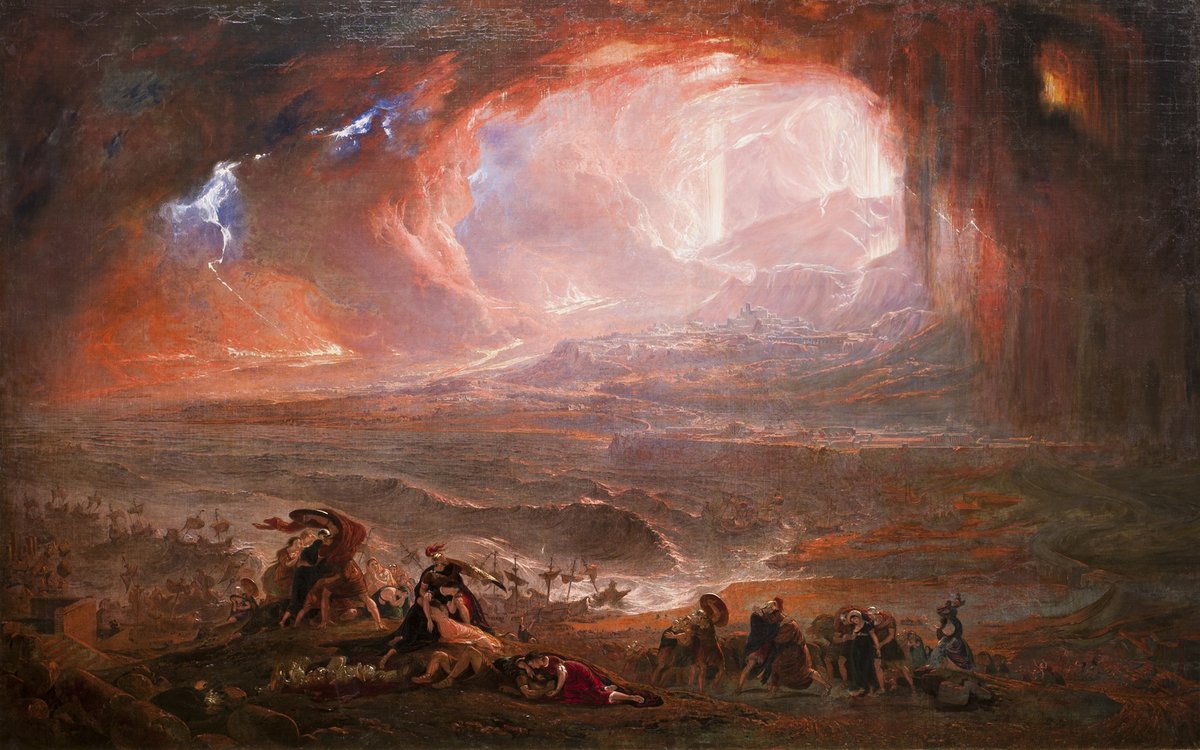
October 24, 79 AD — In 79 AD Pliny the Younger was seventeen and staying with his famous uncle, Pliny the Elder, a naturalist, author and naval commander for the Roman fleet at Misenum in the Bay of Naples. His account written as a letter to the Roman historian Tacitus 25 years later made the eruption of Vesuvius famous long after Pompeii was buried under debris and forgotten.
Pliny wrote how the volcanic cloud that initially erupted from the mountain:
Pliny goes on to relate how his uncle then sets off across the bay to Pompeii on a rescue mission, while he stays behind with his mother. His uncle later dies on the beach at Pompeii, his body found the next day. In a second letter Pliny describes his uncles' last moments based on eyewitness accounts. Pliny the Younger is also able to describe in vivid detail his experiences escaping the eruption with his mother in the dark, 19 miles from the volcano, all daylight blocked by the explosion with ash raining down upon them.
Pliny's description of how Vesuvius's column of pumice and ash later collapsed has helped scientists ascertain that the volcano then sent waves of pyroclastic surges at 180-220 °C (360-430 °F) across the countryside burying Pompeii and nearby Herculaneum and killing instantly the estimated 1,500 people still left behind.
So precise was Pliny's memory and description of the large cloud that blew out of Vesuvius that modern volcanologists have termed these types of eruptions Plinian eruptions. Other volcanic eruptions of this type include the 1883 eruption of Krakatoa in Indonesia, Mount St Helen's in the United States in 1980 and Mount Pinatubo in the Philippines in 1991.
The ruins of Pompeii were not rediscovered until 1599 and not properly excavated until 1748 when the discovery of an almost perfectly preserved Roman society caused a sensation across Europe.
Pliny himself went on to have a distinguished career as a Roman official and as a man of letters. Pliny the Younger was our source for the exact date of the eruption, in his Letters he notes it occurred 24 August 79 AD. Curiously in 2018 archaeologists working in Pompeii uncovered notes by a probably a builder repairing a house with the date 16 days before the "calends" of November, or 17 October in modern dating. It now appears probable that the eruption happened 24 October 79 AD instead and that Pliny's Letters had been mistranslated as some point.
More news today
loading...