Today
20
in History
26
January
February
March
April
May
June
July
August
September
October
November
December
01
Wed
02
Thu
03
Fri
04
Sat
05
Sun
06
Mon
07
Tue
08
Wed
09
Thu
10
Fri
11
Sat
12
Sun
13
Mon
14
Tue
15
Wed
16
Thu
17
Fri
18
Sat
19
Sun
20
Mon
21
Tue
22
Wed
23
Thu
24
Fri
25
Sat
26
Sun
27
Mon
28
Tue
29
Wed
30
Thu
31
Fri
...
07-30-1898
'Iron Chancellor' Bismarck Dies
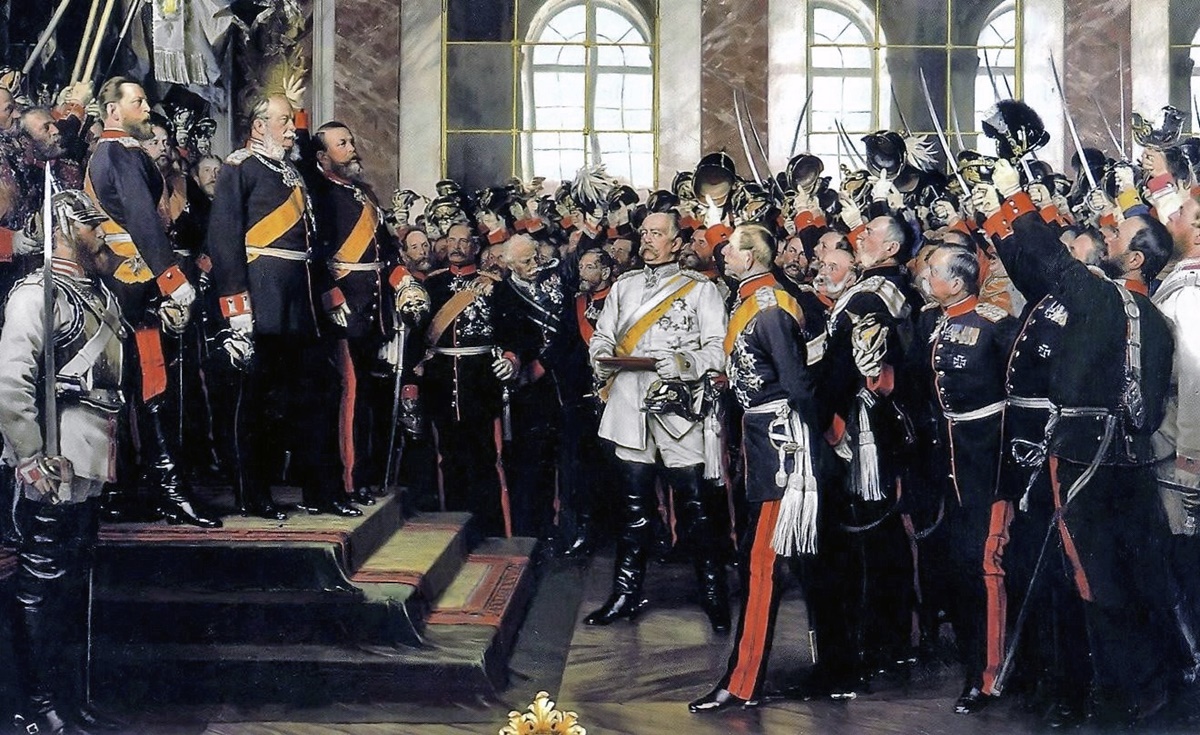
July 30, 1898 — Germany’s “Iron Chancellor” Otto von Bismarck, the man who in effect laid the groundwork for both world wars, died on this day.
The German word “reich” means “empire,” although it can also be translated as "government." In 1930s Germany, the Nazi party identified their rule as the Third Reich which, they said, would last a thousand years.
They probably had in mind the First Reich which, indeed lasted a thousand years, having been established in 800 AD. Eventually, the French under Napoleon took control of the First Reich and it was dissolved in 1806. Germany did not have another functional government until 1871 when the Second Reich was formed.
And the man largely responsible for that was Otto von Bismarck. After the 1806 dissolution there were 39 independent German states including Prussia, the largest and most powerful of them all. Bismarck spent 28 years as Prime Minister of Prussia and 19 years as Chancellor of a united Germany.
Between 1862 and 1871, this brilliant politician used a combination of persuasion, strategy, skill, and outright warfare to create a new German Empire dominated by Prussia, and ruled by the Kaiser.
The final step on the road to a Second Reich was the Franco-Prussian war of 1870 when France was quickly defeated. In a symbolic show of force, the new Reich was announced in France itself, the country where the first empire was ended in 1806. Prussian King Wilhelm I was hailed as Germany’s new Emperor (Kaiser) in the Hall of Mirrors at Versailles Palace, 24km (15 miles) from Paris – a tremendous insult to the French.
Bismarck was born at Schönhausen, northwest of Berlin. His father belonged to the Prussian landowning elite, although the family’s economic circumstances were modest.
He studied law at university but from 1839 to 1847 contented himself leading the ordinary life of a Prussian country squire. Turning to politics, in 1849 he was elected to the Prussian Chamber of Deputies and moved his family to Berlin.
Throughout his career Bismarck held nothing but contempt for the Left and described socialists and liberals as “this country’s rats who should be eliminated.” Unfortunately for him, a coalition of such parties took control of the Reichstag in 1890 and the (by then) ageing, bitter Chancellor was soon forced out of office.
Despite his right-wing credentials, however, Bismarck stole some jewels from the socialist crown and created Europe’s first modern welfare state, establishing national healthcare in 1883, accident insurance in1884 and old age pensions in 1889.
As he once said himself, “politics is the art of the possible.” But his true nature is probably reflected better by his message to the Prussian House of Deputies in 1862: "Not by speeches and votes of the majority are the great questions of the time decided – but by iron and blood."
Largely because of Bismarck, the various German kingdoms were united into a single country, which became one of the most powerful nations in Europe. Twentieth century history tells where that led.
After defeat in the First World War the Second Reich came to an end in 1918 with the Kaiser forced into abdication and exile; and a republic declared.
Bismarck died on July 30, 1898 at Friedrichsruh, Prussia. He was 83.
Jonathan Steinberg, in his 2011 biography of Bismarck, wrote that he was “a political genius of a very unusual kind [whose success] rested on several sets of conflicting characteristics among which brutal, disarming honesty mingled with the wiles and deceits of a confidence man.
“He played his parts with perfect self-confidence, yet mixed them with rage, anxiety, illness, hypochrondria, and irrationality. ... He used democracy when it suited him.
“He utterly dominated his cabinet ministers with a sovereign contempt and blackened their reputations as soon as he no longer needed them. He outwitted the parliamentary parties, even the strongest of them, and betrayed all those ... who had put him into power.
“By 1870 even his closest friends ... realised that they had helped put a demonic figure into power.”
More news today
loading...