Today
20
in History
26
January
February
March
April
May
June
July
August
September
October
November
December
01
Sun
02
Mon
03
Tue
04
Wed
05
Thu
06
Fri
07
Sat
08
Sun
09
Mon
10
Tue
11
Wed
12
Thu
13
Fri
14
Sat
15
Sun
16
Mon
17
Tue
18
Wed
19
Thu
20
Fri
21
Sat
22
Sun
23
Mon
24
Tue
25
Wed
26
Thu
27
Fri
28
Sat
29
Sun
30
Mon
...
11-12-1982
Yuri Andropov assumes power in the Soviet Union
Following the death of long-time Soviet leader Leonid Brezhnev two days earlier, Yuri Andropov is selected as the new general secretary of the Communist Party in the Soviet Union. It was the culmination of a long, but steady march up the Communist Party hierarchy for Andropov.
Born in Russia in 1914, by the 1930s Andropov was an active participant in the Communist Youth League. During World War II, he led a group of guerilla fighters who operated behind Nazi lines. His work led to various positions in Moscow, and in 1954, he was named as Soviet ambassador to Hungary. During the Hungarian crisis of 1956, Andropov proved his reliability. He lied to Hungarian Prime Minister Imre Nagy about Soviet military intentions, and later assured Nagy that he was safe from Soviet reprisals. Soviet tanks rolled into Budapest in November 1956 and Nagy was captured and executed in 1958.Andropov’s work in Hungary brought him back to Moscow, where he continued to rise through the ranks of the Communist Party. In 1967, he was named head of the KGB, Russia’s secret police force.
A hard-liner, he supported the 1968 invasion of Czechoslovakia and oversaw the crackdown on dissidents such as Andrei Sakharov and Aleksandr Solzhenitzyn. In 1982, with Brezhnev deathly ill and fading fast, Andropov left the KGB and began jockeying for power. When Brezhnev died on November 10, 1982, Andropov was poised to assume power. He was named general secretary on November 12.His rule was short-lived, but eventful. At home, he tried to reinvigorate the flagging Russian economy and attacked corruption and rising alcoholism among the Soviet people.
In his foreign policy, Andropov faced off against the adamantly anticommunist diplomacy of President Ronald Reagan. Relations between the United States and the Soviet Union were severely strained when Soviet pilots shot down a Korean airliner in September 1983. Later that year, Soviet diplomats broke off negotiations concerning reductions in Intermediate Range Nuclear Forces and the Strategic Arms Reduction Talks (START).
Andropov had suffered from nearly debilitating illnesses since early 1983, and died on February 9, 1984. He was succeeded by Konstantin Chernenko.
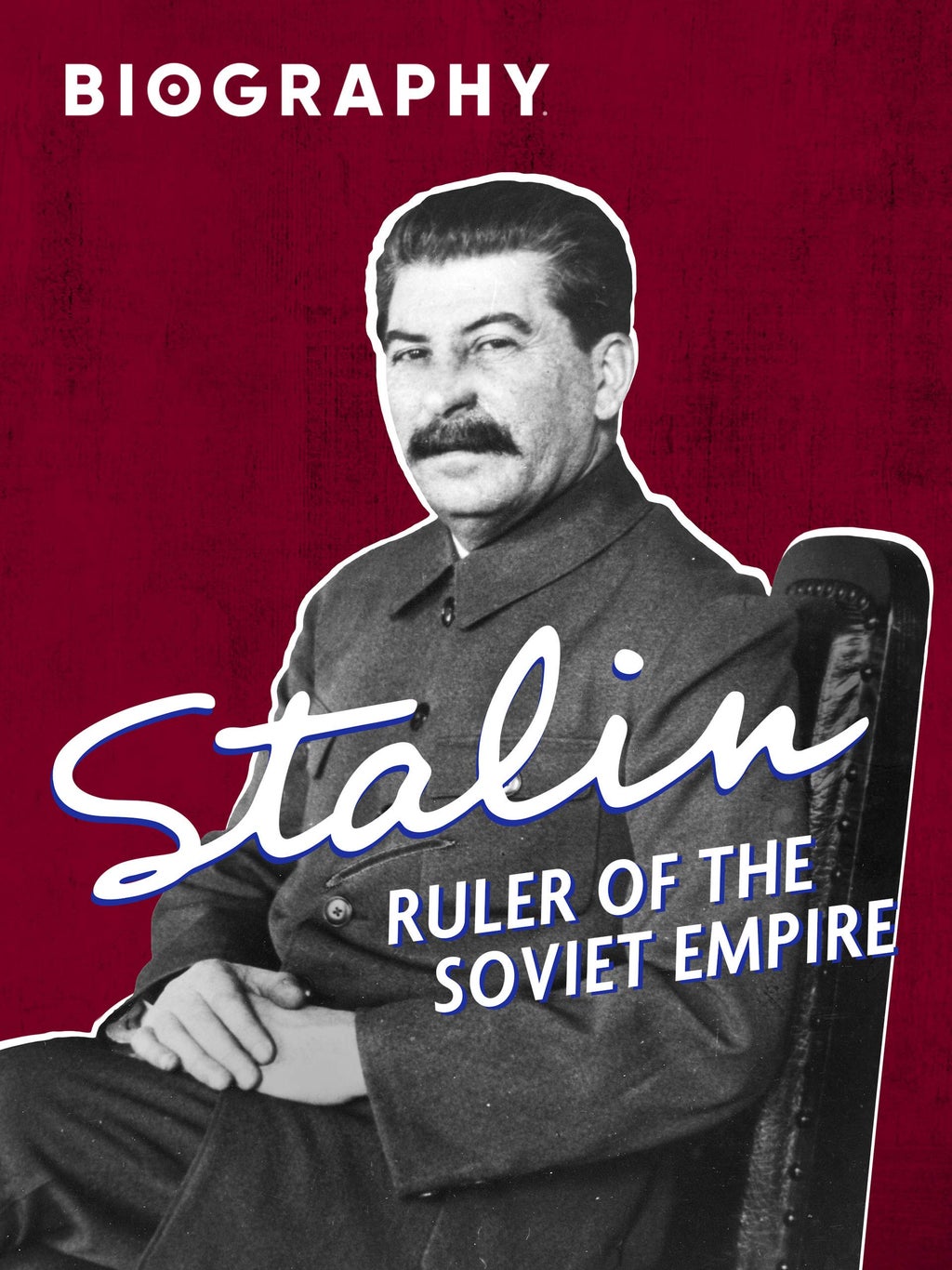
The Iron Curtain parts for a portrait of Joseph Stalin, the Russian dictator who ruled supreme over the Soviet Union from 1929-1953. Through methods of fear and intimidation, as well as death, millions of his own citizens died under his regime.
More news today
loading...