Today
20
in History
26
January
February
March
April
May
June
July
August
September
October
November
December
01
Sun
02
Mon
03
Tue
04
Wed
05
Thu
06
Fri
07
Sat
08
Sun
09
Mon
10
Tue
11
Wed
12
Thu
13
Fri
14
Sat
15
Sun
16
Mon
17
Tue
18
Wed
19
Thu
20
Fri
21
Sat
22
Sun
23
Mon
24
Tue
25
Wed
26
Thu
27
Fri
28
Sat
...
02-07-1962
Full U.S.‑Cuba embargo is announced
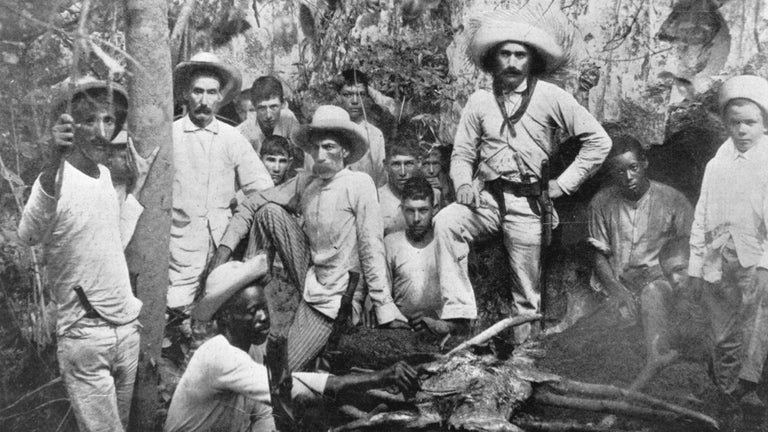
On February 7, 1962, President John F. Kennedy issues an executive order broadening the United States’ restrictions on trade with Cuba. The ensuing embargo, which effectively restricts all trade between Cuba and the United States, has had profoundly negative effects on the island nation’s economy and shaped the recent history of the Western Hemisphere.
The embargo was the result of a rapid decline in U.S.-Cuban relations. Though Fidel Castro’s revolutionaries had deposed a government backed by the U.S. in 1959, the new Cuban regime initially sought a friendly relationship with its most powerful neighbor. Castro undertook a goodwill tour of the States and spoke excitedly of greater regional cooperation, but the Americans remained skeptical, fearing that he was a communist. The following year, President Dwight D. Eisenhower barred American companies from selling oil to Cuba, prompting Castro to nationalize all three American oil refineries on the island. After the Bay of Pigs Invasion, a botched attempt at counter-revolution staged by the CIA in 1961, Castro abandoned all hope of a friendly relationship with the U.S., declaring Cuba to be Marxist. The diplomatic situation grew icier and icier, leading Kennedy to broaden the embargo.
The embargo has lapsed several times, notably under Presidents Jimmy Carter and Barack Obama. As a result, it has become easier for Americans to legally enter Cuba, although travel is still restricted, and some American agribusinesses are allowed to sell to Cuba. Nonetheless, the embargo has had a devastating effect. Though the U.S. economy is actually estimated to lose substantially more per year—nearly $5 billion—due to the embargo, the much smaller economy of Cuba is estimated to lose roughly $685 million per year. Losses from potential American tourists, who flock to virtually every other island in the Caribbean, account for much of that.
The embargo has never achieved the main objective of most embargoes—isolating the target nation and forcing it to acquiesce to its opponent’s demands—but did force Cuba to become highly dependent on the Soviet Union. When the USSR dissolved in 1991, the Cuban economy was devastated. Cuba continues to trade with the rest of the world, but the embargo on the movement of people and goods between the island and the region’s wealthiest, most powerful nation has dealt its economy a blow that has hampered the its development for nearly all of its history as an independent nation.
More news today
loading...